
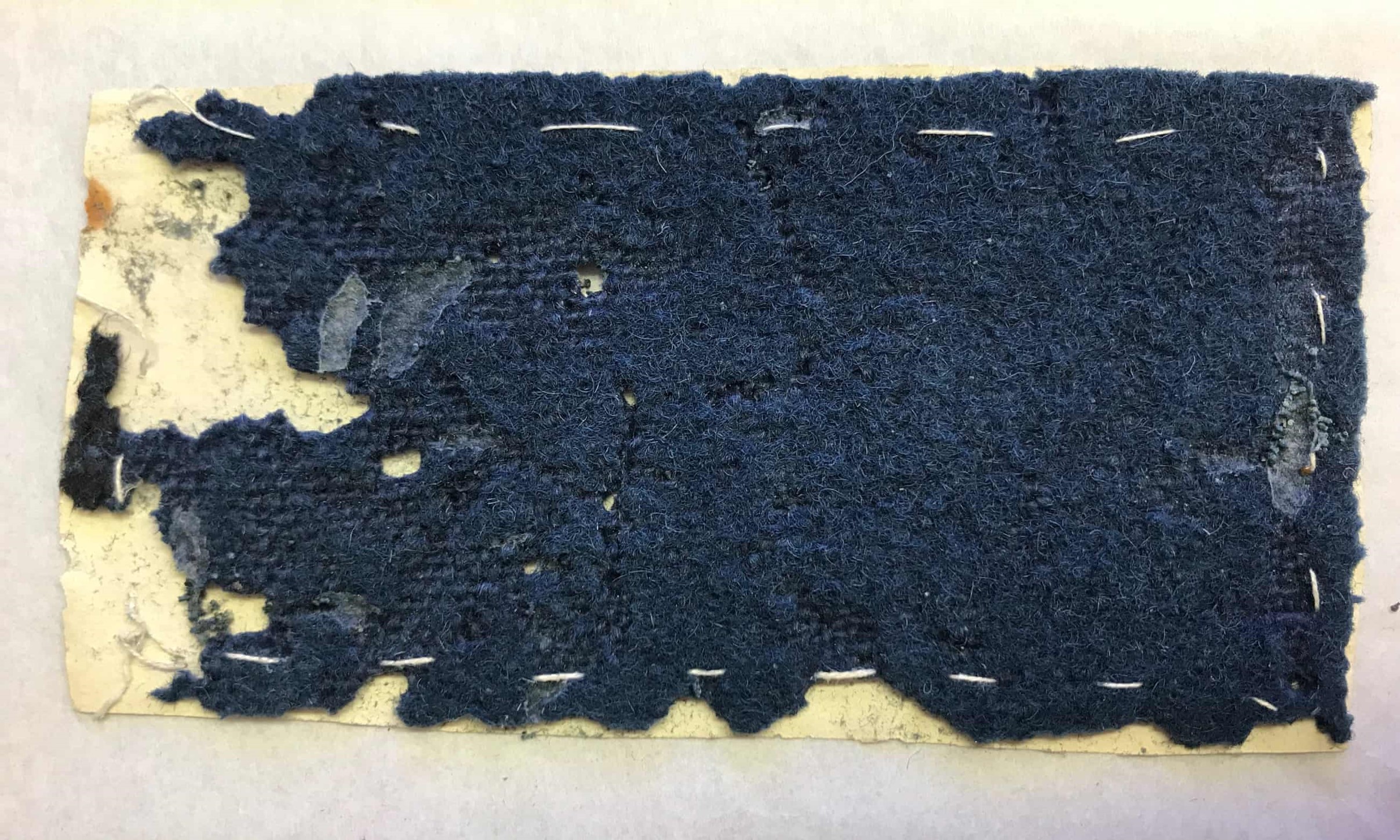
Native Americans and the cotton empire

This article draws on research supporting the co-curation of The Penistone Cloth: Textiles and Slavery – From the Pennines to Barbados and Beyond exhibition held at Blackburn Museum and Art Gallery as part of the British Textile Biennial
“The soldiers gathered them up, all up, and put them in camps. They hunted them and ran them down until they got all of them. Even before they were loaded in wagons, many of them got sick and died. They were all grief stricken they lost all on earth they had. White men even robbed their dead’s graves to get their jewelry and other little trinkets.”
Excerpt from the account of Elizabeth Watts, a Cherokee woman, 1937.
This account, passed down to Elizabeth Watts by her family, describes the expulsion of Native Americans from their ancestral southeastern homelands, following the Indian Removal Act of 1830. This Act authorised the ethnic cleansing of Native tribes east of the Mississippi River, so that white settlers could colonise the southern US to expand the plantation system.
By exploiting enslaved Africans to labour on these vast swathes of stolen land, which had been sold cheaply to Euro-American settlers and enslavers, the US rapidly rose to dominate the global cotton market. This blog will explore the devastating impact of this ‘cotton empire’ on Native American tribes.
Growth of the United States Cotton Industry
In 1803, the United States nearly doubled in size when it purchased “ownership” of the Louisiana Territory from the French. Despite being the ancestral and current home to many thousands of Native people, for U.S. interests, this land was destined to be absorbed into the plantation economy, becoming a new frontier for settler colonialism. According to President Andrew Jackson, the removal of Native Americans would “enable those states to advance rapidly in population, wealth, and power”.

Wikimedia Commons.
Throughout the 18th century, Britain’s growing textile industry had largely depended on the Caribbean to meet its constant demand for raw cotton. However, after Eli Whitney invented the cotton gin in 1793, cotton production levels began to rise rapidly in the U.S. As the country grew in power and cotton planting rose in profitability, there was increasing motivation to expand cultivation across the southeast states such as the Carolinas, Georgia, Tennessee, Alabama, and Mississippi.
The warm climate and fertile soil made the area ideal for cotton growing. While the gin had mechanised the cleaning of cotton, the extraordinary amount of labour required for its planting, tending and harvesting was provided by growing numbers of enslaved Africans being trafficked to newly-established plantations.
The Removal Treaties
Addressing Congress in December of 1830, President Jackson announced his pleasure at the progress being made in the removal of Native Americans from vast ancestral lands east of the Mississippi River to Oklahoma, part of the Louisiana Purchase territories. He extolled the generosity of his government in offering treaties guaranteeing ‘equal land’ to Native tribes.
“Can it be cruel in this Government when, by events which it can not control, the Indian is made discontented in his ancient home to purchase his lands, to give him a new and extensive territory, to pay the expense of his removal, and support him a year in his new abode?”
President Andrew Jackson, 1830.
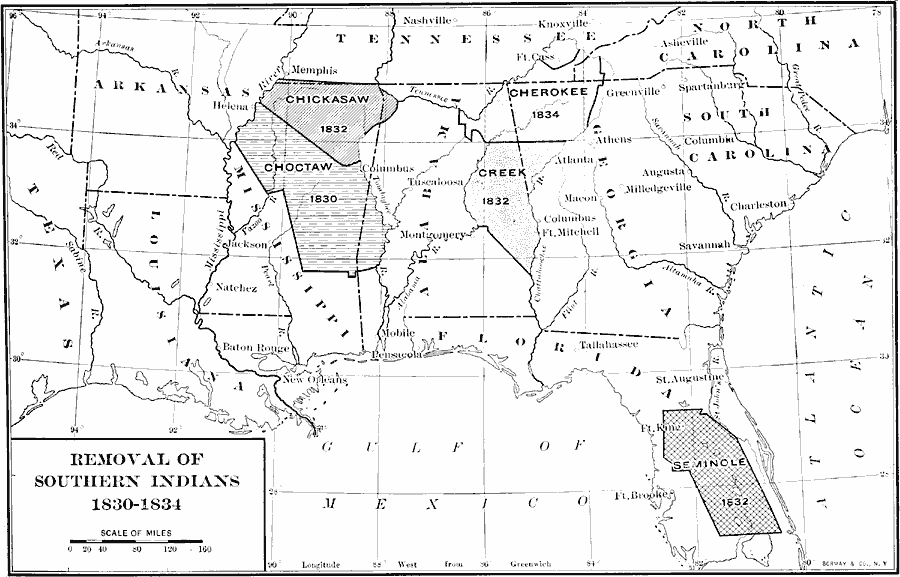
Florida Center for Instructional Technology.
Realistically, these treaties stripped Native Americans of their rights, homes, possessions, peace, and even lives. Protesting the Treaty of New Echota, the Cherokee Chief John Ross outlined the atrocities made possible by this act:
“By the stipulations of this instrument, we are despoiled of our private possessions, the indefeasible property of individuals. We are stripped of every attribute of freedom and eligibility for legal self-defence. Our property may be plundered before our eyes; violence may be committed on our persons; even our lives may be taken away, and there is none to regard our complaints. We are denationalized; we are disfranchised. We are deprived of membership in the human family!”
The Trail of Tears
Many Native Americans resisted being driven from their homelands. Having been presented with a treaty in 1818, the Chickasaw tribe, for instance, responded that they “would lose every drop of blood in their veins before they would yield to the United States another acre of land.”
However, the United States were growing increasingly powerful, and Native populations had already been decimated by war and disease. The government had also managed to bribe several tribal leaders into signing away their people’s land. By the 1840s, nearly all Native Americans had been driven from the area, clearing approximately 25 million acres of land and an estimated 50-100,000 people.
The journey west was extremely brutal, with disease, famine, exposure and violence leading to huge death tolls. One particularly harrowing example was the clearance of the Cherokee tribe throughout 1838-9. During this journey, which is often referred to as the Trail of Tears, 4,000 members of the 16,000-strong population were estimated to have died.
“The road they traveled, history calls the ‘Trail of Tears’. This trail was more than tears. It was death, sorrow, hunger, exposure, and humiliation to a civilized* people as were the Cherokees.”
Elizabeth Watts, 1937. *The Cherokee people were one of the so-called “Civilized Tribes”, having adopted many European land and ownership practices and legalised government structures – none of which prevented their othering and removal.
Testimonies from Native American people paint a vivid picture of the brutality, pain and suffering inflicted upon their tribes for the benefit of the global cotton empire. While wealthy mill owners thrived in the northwest of England, the enormous demand for raw cotton fuelled violent land clearances across the Atlantic; widespread exploitation proliferated with the growth of a society structured around racist European ideology, capitalism and slavery. As we look back over the landscape of the plantation system, it is vital that we recognise and remember the human cost of cotton.
Find out more
Online
U.S. National Archives, On Exhibit: The Indian Removal Act
The American Yawp, Manifest Destiny
Digital History, Indian Removal: The Human Meaning of Removal
Books
Walter Johnson, River of Dark Dreams: Slavery and Empire in the Cotton Kingdom (2017).
Sven Beckert, Empire of Cotton: A Global History (2015).




This project has been supported by the UCL UK Office, supporting the development of collaborations and research impact across the UK.
 GLOBAL THREADS
