
In November members of the Global Threads team delivered a panel at the Science Museum Group’s annual research conference, which was held at the Science and Industry Museum in Manchester. It was a fantastic opportunity to share Global Threads with a wide range of people, as well as hear some brilliant researchers talk about their own projects.

Taking place in a city shaped by the textiles industry, in a museum dedicated to interpreting these histories through its collections, the conference programme promised ‘a far-ranging exploration of the history and material culture of textiles’, which it certainly delivered. Over two days, we heard from speakers including PhD students Elli Michaela Young, who shared her research into the Jamaican Fashion Guild, and Alexander Appleton, who spoke about his research into the trading activities of 19th century textiles merchants Langworthy Brothers in South America.
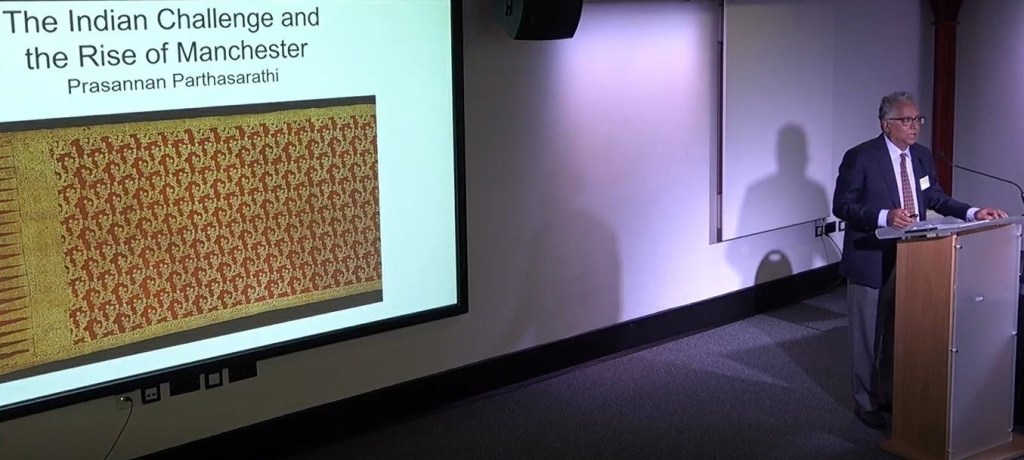
We enjoyed presentations from members of the Cottonopolis Collective, on their work to investigate the global environmental impacts and legacies of Manchester’s textiles industry, and Dr Josephine Tierney, who shared her research on the design and manufacture of British printed textiles for export to West Africa. The keynote lecture was delivered by Professor Prasannan Parthasarathi, who explored the centrality of high-quality Indian textiles to the development of Manchester’s cotton industry in the late 18th century.
With so many speakers exploring textiles from an international perspective, our Global Threads panel fitted excellently into the conference programme. In fact, we were given the enviable (or perhaps unenviable!) first presentation slot on day one of the conference, providing us with the opportunity to introduce many of the themes around the global nature of textiles which recurred throughout the conference. We were excited by the opportunity to platform some of the incredible work carried out by the Global Threads researchers, as well as the chance to share insights into our project’s collaborative approach to research, and the opportunities and benefits this offered.
Our panel centred on presentations by three Global Threads researchers, Sibia Akhtar, Megan Bridgeland and Will Douch. Sibia shared research from her case study Global Shifts, which explored the connections between Lancashire’s last mule spinning mill in Oldham and the mechanisation of India’s textiles industry. She gave insights into how the exploration of global narratives can help connect wider, more diverse audiences to industrial heritage, fostering a sense of belonging and relevance.

Will Douch presented findings from his From Green Park to Quay Street case study, which investigated 19th century Manchester philanthropist Eleanora Atherton’s connections to slavery. Her wealth derived in part from two Jamaican sugar plantations, including Green Park Estate, which relied on the exploitation of hundreds of enslaved people. Will shared how his research enabled him to centre the lived experiences of the enslaved people at Green Park, explaining how he was able to draw out names and ages of enslaved people at the Estate from slave resigers, in order to present individual, human stories.

Megan Bridgeland’s presentation shared research from her Creativity, Craft and Community case study, which explored how enslaved women used textiles as tools for resistance, self-expression and the preservation of cultural heritage. Megan spoke about her exploration of the skills and techniques enslaved women used, from the crafting of lace bark slippers in Jamaica to the sewing of quilts in the United States. She shared the importance of centring the skills and expertise of enslaved people, and highlighting the ways they were able to preserve their culture and heritage, as a form of resistance against their enslavers.
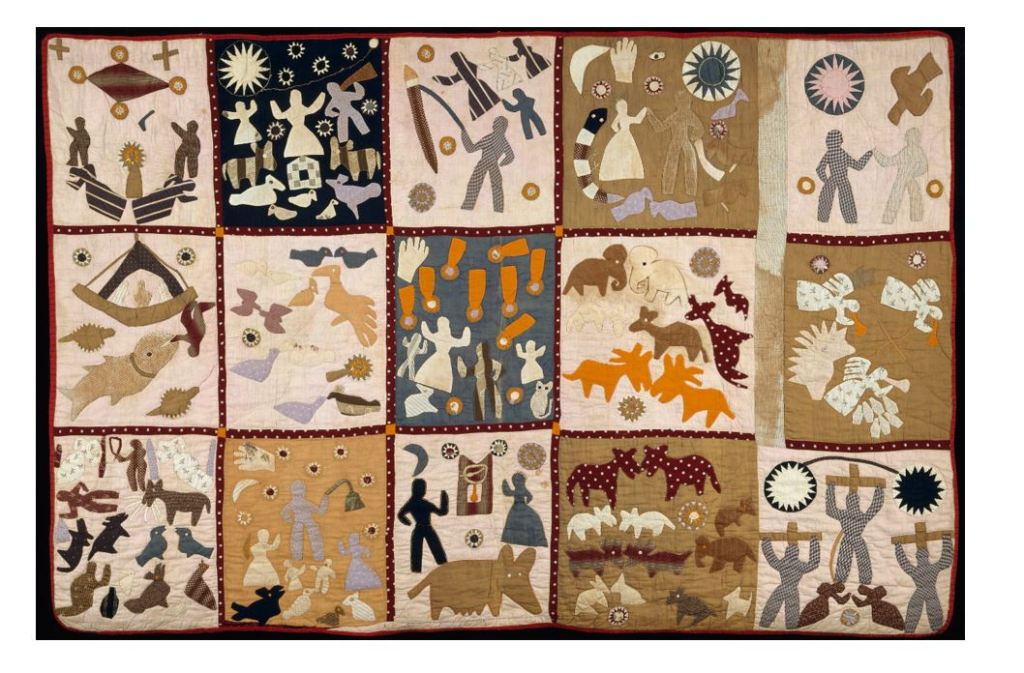
Wikimedia Commons.
We were delighted to be able to share Global Threads at the Science Museum Group conference and connect with others carrying out research into the global nature of Britain’s textiles industry, and we are excited to see where Global Threads takes us next…
 GLOBAL THREADS

Leave a comment