
Meet the Global Threads team
Sibia Akhtar
Sibia completed her Master of History in September 2020, funded by a scholarship from the Aziz Foundation. She focused on issues of race and racism in modern Britain and ways to make that history more accessible using public history approaches.
Sibia recently served on the Society of Readers and Writers for the Portico Prize to judge a selection of books and poems which best evoked the ‘spirit of the North’.
Her research with the Global Threads Public History project focuses on retelling the history of Elk Mill as well as the significance of South Asian textiles in shaping leisure activities and political resistance. These stories are often hidden so her work here is to uncover the rich histories in hope that people will learn more about these local stories and their global connections.
Sibia’s Global Threads:

Megan Bridgeland
I am currently undertaking my PhD at the Centre for the History of Science, Technology and Medicine (CHSTM) at the University of Manchester, exploring the emergence of modern neurosurgery in the UK.
Being interested in social history, my Global Threads research has aimed to amplify the voices and lived experiences of marginalised groups connected through the global textile industry. My case studies and blogs have focused on themes of resistance, community and innovation amongst enslaved and Indigenous people across the Americas.
I am very grateful for the opportunity to be developing not just as a researcher with Global Threads, but also to be gaining experience engaging a range of public audiences through written pieces, workshops and exhibitions.
Megan’s Global Threads:
Creativity, Craft and Community
Global Threads Engagement Team
The Penistone Cloth exhibition

Antonia Canal
For over 10 years, Antonia has led community-focussed heritage projects across Greater Manchester. Her practice is rooted in anti-racism and decolonisation, with a commitment to transforming heritage spaces into places of radical belonging, creativity and imagination.
She is an advisory panel member for the Guardian’s Legacies of Enslavement programme, aiming to deliver restorative justice in collaboration with communities still affected by the legacies of transatlantic slavery.
Antonia worked as Activity Planner on the Portico Library’s National Lottery Heritage Fund supported Reunited project, supporting testing and development across exhibitions, events, research and learning.
Antonia’s Global Threads:

Cameron Christie
I graduated in 2021 from an MA in Visual Anthropology at the University of Manchester and have been focussing on documenting experiences of gentrification in DIY music scenes. After working on Global Threads I would like to work on making documentary films and putting on local music events.
Writing a case study for Global Threads interested me because I wanted to investigate the strategies and tactics of marginalised communities as well develop a historical narrative that focussed less on specific politicians and more on characterising the daily experiences of ordinary people.
Cameron’s Global Threads:

William Douch
I am a recent graduate from the University of Kent and University College London, where I studied History at both institutions. I have always been intrigued by Britain’s colonial past and the global effect it has had and it was a central part of my degrees. I wanted to get involved in the Global Threads project because wanted to continue this interest in Britain’s colonial past by exploring how local cities have significant ties and connections to different locations throughout the world.
William’s Global Threads:

Holly French
Born and raised in Vancouver, Canada, on the traditional unceded territory of the Matsqui, Kwantlen, Katzie, and Semiahmoo First Nations, Holly did her BA in History at Simon Fraser University and her MA in History at University College London, where she hopes to return for a PhD. Her primary research interest is in late British decolonisation and its impact on the British metropole and on Anglo-Canadian relations.
As a descendent of the Irish diaspora herself, she enjoyed researching the history of the Mancunian Irish and their turmoil and triumphs in the nineteenth century and using her creative writing skills to transmit these stories to the public as part of this project.
Holly’s Global Threads:

Holly Graham
Holly Graham is a London-based artist whose work looks at ways in which memory and narrative shape collective histories. She is an Associate Lecturer at the Royal College of Art, London. Holly has worked with Global Threads to gather research in support of her UAL 20/20 commission at Manchester Art Gallery, that considers legacies of expansionism, colonialism and exploitative labour inherent to the material history of cotton and the development of the city.
Holly’s Global Threads:
The Warp/ The Weft/ The Wake exhibition

Shanthi Hegde
Shanthi is a rising fourth-year undergraduate at Northeastern University in Boston, Massachusetts, studying Biology and History. Her research interests focus on the history of pain and pain perception during the transatlantic slave trade and the epigenetic impacts of enslavement. She has been working under the guidance of Professor Victoria Cain on these topics.
Shanthi has previously presented her work at Northeastern’s RISE Research showcase and collaborated with the Smithsonian Museum of Natural History’s Anthropology department to analyze health data collected from the remains of enslaved individuals.
Shanthi’s Global Threads:
This summer, she will continue her research by examining the connection between the cotton trade between South Carolina and Manchester and the pain endured by enslaved cotton laborers. She will be analyzing medical, shipment, and bookkeeping records from the South Carolina Historical Society and the John Rylands Library, Manchester.
To support her project, Shanthi has received the PEAK Summit Grant and the EJM Undergraduate Research Fund from Northeastern’s College of Social Sciences and Humanities.
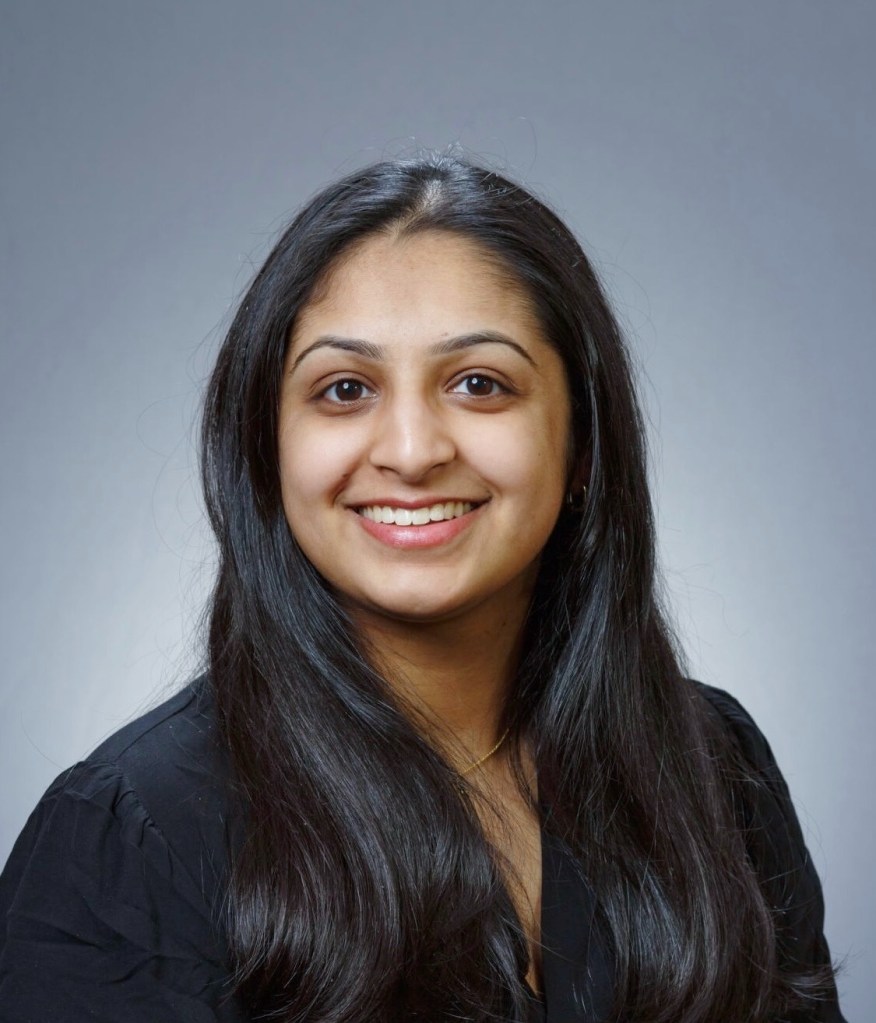
Destinie Reynolds
Destinie is a penultimate year undergraduate student in History and Spanish at the University of Manchester. She focuses on race in modern Britain, considering how the Black community used space to navigate the post-Windrush hostile environment. She has worked on other projects including, the Windrush Scandal in its National and Commonwealth contexts with the Institute of Historical Research and a collaborative project with the Royal Exchange Theatre and the Race Roots Resistance collective as an Emerging Scholar.
Working on the Global Threads project allowed me to investigate the human side to the Cottonopolis – highlighting the slave trade’s impact on enslaved communities in the US. Importantly, this project granted me the opportunity to reveal the diverse forms of resistance and self-determination during the plantation regime until the Reconstruction era. I hope my research can be used to amplify the hidden voices of enslaved people to a broader audience.
Destinie’s Global Threads:
The Warp/ The Weft/ The Wake exhibition
Edisto Island and McConnel and Kennedy: The Invisibilised Labour Behind Manchester’s Mills

Tiger Ritchie
I’m an aspiring documentary filmmaker, who over the past five years has worked hard to attain two degrees based in practical social research. During my BSC in Sociology, my research was centred on racism, identity, inequality and social policy. During my MSC in Visual Anthropology, my final project explored the future of public art, its relationship to the representation of minorities and changing urban materialities.
Reflecting on where my interest in this subject area originates from, I think back to school, where we’re taught about the industrial revolution and the role of the cotton industry within this. Somewhat worryingly, there was never mention of where the cotton came from, nor the labour of enslaved persons, which this industry so heavily relied on.
This is why I chose to focus my research towards exploring Manchester’s connection to women’s experiences in the Sea Islands through their connection within the cotton industry. My ambition for this project is for people to reflect on the way in which history is taught, by sparking an interest in people to uncover the gaps that have been established within mainstream attention.
Tiger’s Global Threads:
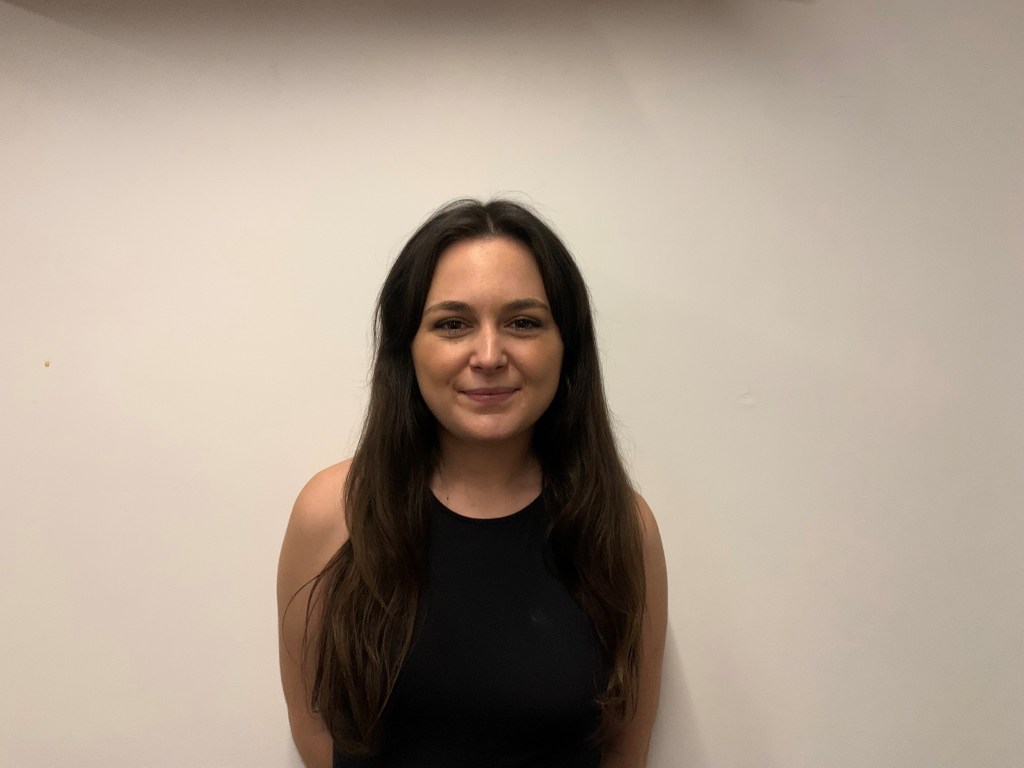
Serena Robinson
I graduated from Manchester University in 2019 with a MA in Social Anthropology. I’m interested in gender and race and how these intersect to affect the everyday lives of people.
Doing this research allowed me to explore gender and race through a historical lens via Sarah Parker Remond and her visit to Manchester in 1859. I hope that this research highlights the power of Black women throughout history.
Serena’s Global Threads:
The Penistone Cloth exhibition
Control & Contestation: Clothing for Enslaved People
Fabric of Injustice: Unveiling the Lives of Enslaved Families at Turner’s Hall
The Warp/ The Weft/ The Wake exhibition
Hillsborough and Manchester: Tracing Profits and Recovering Lives in the Archive

Jeevan Kaur Sanghera
Jeevan completed her Masters in History at the University of Manchester in 2022. She currently works in the heritage sector, and is a freelance researcher and writer. Her work takes an intersectional approach to the study of race, migration, and diaspora.
Jeevan was a member of the inaugural cohort of the Emerging Scholars programme, which aims to deepen collective understanding of how profits from the transatlantic slavery economy contributed to the cultural and educational development of the University of Manchester and its surrounding region. She was also the Student Curator for the exhibition Founders and Funders: Slavery and the Building of a University.
Jeevan’s Global Threads:
In pursuit of a Heywood voyage – from Manchester to Liverpool to Calabar and a Grenadan uprising
The cotton king – empire, enslavement, and the making of modern Manchester
Ella Sinclair
Ella Sinclair is a freelance writer and researcher based in London. Her work focuses on race, racism, politics, history, and social justice. She has written for The Guardian, The Lead, The Voice, and gal-dem. Find her on Twitter.
Ella’s Global Threads:
Cotton Capital: Institutional Restorative Justice in a Society Hostile to Remembering
The Warp/ The Weft/ The Wake exhibition
Culture, Cotton, and Wealth: The Manchester Athenaeum in 1859
“Thirsty for Knowledge” – The Portico’s transatlantic newsroom and library
The Portico Library in the age of revolution – Haiti, France, and Manchester
Interwoven Histories – The Portico, Hugh Hornby Birley, and slavery in the Caribbean

Katie Vidal Belshaw
Katie Belshaw is Senior Curator at the Science and Industry Museum. She looks after the museum’s industrial heritage collections, including objects and stories relating to Manchester’s textiles industry.
Katie is interested in understanding more about the global connections that shaped Manchester’s industrialisation, as well as the impact Manchester’s textiles trade had on people and places around the world.
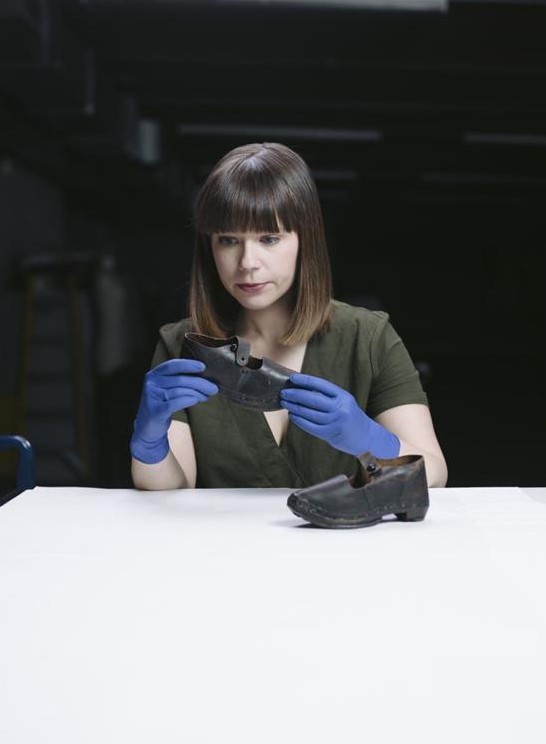
Matthew J. Smith
Matt is Director of the CSLBS and Professor of Caribbean History at UCL. He is proud to be part of a project that highlights the close yet often invisible connections between Manchester’s history and the history of slavery and emancipation in the Americas.
Projects like Global Threads contribute through public history and engagement to the building of community knowledge and awareness of these often difficult histories.

Matthew Stallard
Matt has lived, worked, and studied in Manchester for 20 years. He is a researcher and public history project manager at the Centre for the Study of Legacies of British Slavery, UCL.
His work focuses on uncovering lived experiences of class, race, and identities and the deep entwining of industrialisation and colonisation and de-industrialisation and post-colonisation, particularly focused on his adopted Mancunian home and his native Black Country.



This project has been supported by the UCL UK Office, supporting the development of collaborations and research impact across the UK.
 GLOBAL THREADS